
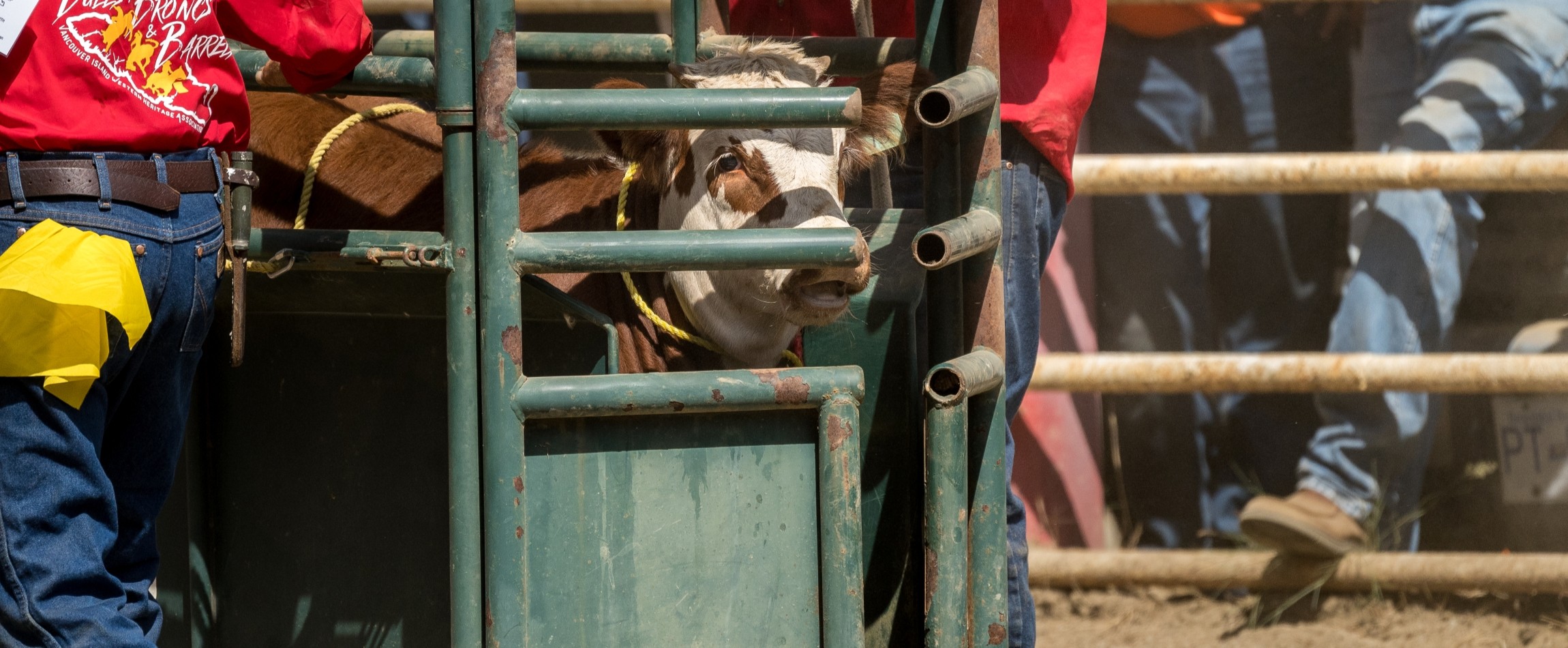
Rodeo Calves Experience Fear While In The Chute


Calf rope-and-tie, or calf-roping, is a controversial rodeo event where a calf is chased by a rider, roped, and then tied by three legs. While many welfare concerns focus on the abrupt neck jerking and forceful dropping to the ground, the time spent in the chute — the narrow metal box where animals are held before release — is often overlooked. This study sought to fill that gap by observing whether calves show signs of fear and stress before they even enter the arena.
Researchers analyzed video footage of calf-roping events taken at a single rodeo venue over a two-day period in Queensland, Australia, in June 2023. Based on the longest amount of time spent in the chute, they split the footage into two categories:
- Short duration, where calves were held for 28 to 51 seconds; and
- Long duration, where calves were held for 52 to 166 seconds.
This helped ensure similar group sizes for comparison. To standardize the comparison, the team only scored the final 28 seconds of behavior for every calf before they were released. They used a specialized list of 17 behaviors, including six “red flag” behaviors that indicate more severe negative emotional states: rearing, an open mouth, tail swishing, a protruding tongue, whites of the eyes showing, and escape attempts. The researchers then scored how often each calf displayed each behavior. The video clips included a total of 31 calves.
The results showed that every single calf in the study displayed at least one behavior associated with fear or stress. Changing ear positions and head movements were the most frequent behaviors. In cows, constant ear-shifting often signals that an animal is on high alert.
Calves held in the chute for longer periods showed an increased frequency of red flag behaviors, indicating a highly negative emotional state. There were also several key differences between the two groups in the expression of these behaviors. Overall, the long-duration group made 12 escape attempts compared to just three in the short-duration group. Long-duration calves also showed higher rates of rearing (nine versus 4), mouth gaping (seven versus one), and tongue protrusion (six versus zero). This suggests that longer confinement can lead to distress.
The researchers also noted instances of aversive handling. In some clips, handlers pulled calves by their ears or horns or slapped their faces to get them into position. In one extreme case, a handler stepped on a calf’s face for 21 seconds after the animal pushed their nose under the chute gate in an attempt to escape.
This research was a retrospective study, meaning the researchers had to use existing video footage that wasn’t always perfectly clear. Background noise from the crowd and loudspeakers made it impossible to hear if the calves were crying out. Additionally, the study focused on active behaviors like rearing, meaning that it likely missed passive stress responses like freezing or learned helplessness, where an animal becomes immobile.
For animal advocates, this study provides evidence that the welfare of rodeo calves is compromised even before the performance begins. The confinement in the chute, often alongside aggressive handling, can create a state of anxiety, fear, and panic.
While the industry suggests that training can make calves habituated to the chute, these results show that many remain highly reactive and distressed. Advocates can use this data to support calls for legislative reform in Australia, where rodeo regulations vary widely between states and territories, as well as other regions where calf-roping is still popular. Ultimately, the findings suggest that minimizing chute time is only a small fix: the event itself is fundamentally at odds with positive animal welfare.
This summary was drafted by a large language model (LLM) and closely edited by our Research Library Manager for clarity and accuracy. As per our AI policy, Faunalytics only uses LLMs to summarize very long reports (50+ pages) that are not appropriate to assign to volunteers, as well as studies that contain graphic descriptions of animal cruelty or animal industries. We remain committed to bringing you reliable data, which is why any AI-generated work will always be reviewed by a human.
https://doi.org/10.3390/ruminants6010015

Citations:
Dave, A., Evans, D., Vindevoghel, T., Ward, M. P., & Quain, A. (2026). An exploratory study of behaviours expressed by rodeo calves restrained in the chute prior to release in calf-roping events in Australia. Ruminants, 6(1), 15. https://doi.org/10.3390/ruminants6010015
