Most Electric Shock Devices On Farms Fail An Ethical Test


For nearly a century, farms have used electricity to control where animals go and what they do. Beyond fences, the toolkit now includes handheld prods, electrified wires inside barns, and shock-delivering components in robotic milkers and GPS collars. This review argues that because pain is inherently bad and humans are responsible for the animals in their care, deliberately hurting them demands strong justification.
The authors examine seven ways electric shocks are used on farmed animals who remain conscious and able to move. These include:
- Electric fencing
- Cow trainers
- Electric prods
- Electrified barn wires
- Electrified milking gates
- Robotic milkers
- Virtual fencing collars
Their test: because any shock likely causes pain, it’s only justifiable if it brings clear welfare benefits that can’t practicably be achieved another way. For their review, they drew on studies of animal behavior and welfare, plus industry sources. They also gathered published specifications for shock-generating devices sold online.
Electric Fencing
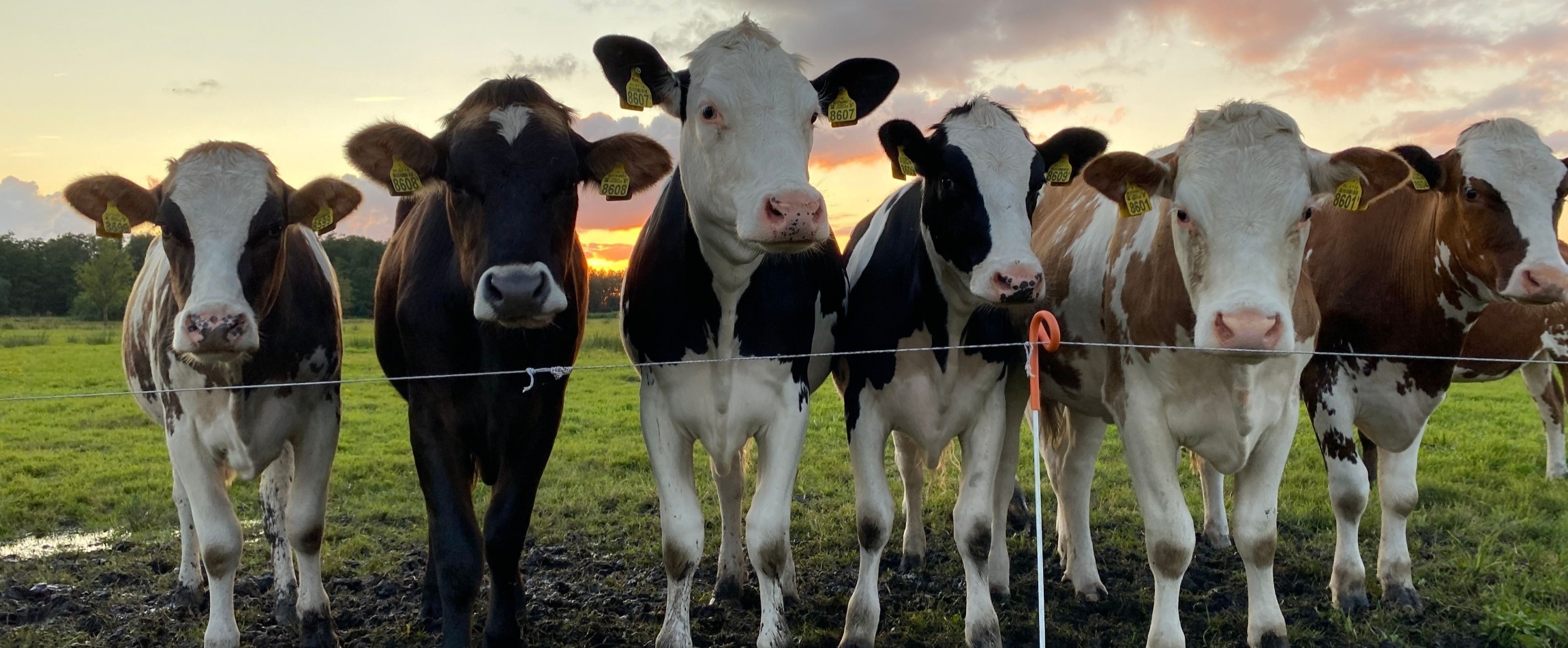
Unlike a hedge or wooden fence, an electric fence usually works to contain animals only because it hurts. Fence energizers listed for cows, sheep, goats, and pigs reached up to 16,800 volts, averaging around 10,000. Rain, vegetation, and an animal’s coat all affect how much current flows. So fences tend to be set for worst-case conditions, and animals are sometimes shocked harder than needed. Because fences can fail, the authors argue that they shouldn’t be relied on near serious dangers like busy highways.
Cow Trainers
These electrified bars sit just above a cow’s shoulders in her stall. If she arches her back to urinate or defecate, she gets shocked, pushing her to step back so waste lands in the gutter. Yet there’s no clear evidence they keep cows cleaner, and they can disrupt normal lying behavior. In a study of over 15,000 cows, those with trainers had more serious health problems, including udder inflammation, and poorer reproductive performance. Trainers can also contribute to stray voltage in nearby metal equipment, which can make cows nervous and reluctant to use water bowls or feeders.
Electric Prods
These handheld, battery-powered rods deliver a shock to get or keep animals moving — for example, on the way to and from milking or when they’re loaded onto or off trucks for slaughter. Prods investigated by the authors delivered 3,800 to 5,000 volts, mostly at the top of that range. They also found no welfare benefit. Studies have linked prod use to stress responses in pigs and cows raised for meat. In their view, prod use often signals poor facility design and management. So facility owners and designers share responsibility to improve conditions, in addition to farm workers.
Electrified Barn Wires
Electrified wires are used to deter hens from laying eggs along barn edges, pecking eggs on conveyors, or perching on feed and water lines. However, they also limit birds’ choices and can add to stray voltage. The authors argue that housing designed around hens’ nesting preferences, with more space and outdoor access, would better address these problems.
Electrified Milking Gates
To save labor at milking time, some farms use motorized gates that slowly push cows toward the milking parlor, and some of these gates carry a live wire. One advice source says these should never exceed 2,500 volts. Yet the only gate energizer the authors found was rated at 7,500 volts. Cows who are lame or otherwise in pain tend to drift to the back of the line. So the cows most likely to be shocked are often those already suffering.
Robotic Milkers
These automated systems let cows walk into a milking stall, where a robotic arm attaches the equipment and milks them without human help. They’re often promoted as letting cows choose when they want to be milked. But if a cow doesn’t leave promptly afterward (within 20 seconds, for example), a hanging wire called a “tickler” shocks her out. In early research, cows lingered a little over three minutes on average, likely needing recovery time. The authors highlight the troubling gap between claims that milking is voluntary and coercing cows into leaving in order to maximize milk yield per machine.
Virtual Fencing Collars
Often used to manage grazing, these systems employ GPS collars that play a sound when an animal nears a programmed boundary, then shock them if they keep going. Unlike electric fences, virtual fencing shocks a known individual at a measurable level on a particular body part. But animals learn at different speeds. In one study of 12 cows, three individuals averaged between about three and six shocks a day, compared to about one for the others. Other research found that after four days of virtual fencing, cows showed reduced activity and grazing time and higher levels of stress hormones in their milk.
The Bigger Picture
According to the authors, automation cuts both ways. It prevents workers from deliberately targeting particular animals. But it also distances people from animals, normalizes shocks, and reduces chances to spot welfare problems.
Based on the review’s core argument that pain needs a welfare benefit that can’t be achieved another way, most common shock devices fail it. The authors conclude that cow trainers, electric prods, and electrified barn wires and milking gates are unlikely to be justifiable. They believe that electric fencing is likely justifiable in some situations if its welfare purpose is clear and it’s carefully managed. They note that robotic milker ticklers and virtual fencing collars need further welfare assessment.
As an ethical critique rather than a systematic review, the paper’s conclusions depend on which studies the authors chose and how they interpreted them. Some key evidence came from small or older studies, like the 12-cow experiment above. The authors were also limited by what device specifications they were able to find online. Many companies, including robotic milker makers and most virtual fencing providers, didn’t publish shock levels at all.
Advocates can push for animal welfare regulations and standards that restrict or ban electric shock devices. Cow trainers, electric prods, and electrified barn wires and milking gates are the strongest candidates for bans. Robotic milker ticklers and virtual fencing collars warrant strict limits and further welfare assessment rather than acceptance on efficiency grounds alone. Advocates can also challenge “voluntary” or “welfare-friendly” technology claims by demanding published shock levels, per-animal shock limits, and independent welfare data.
Just as important is what replaces shocks. The authors’ evidence points to well-designed handling areas and housing, careful management, and attentive, compassionate farm workers. Advocates can champion these changes and reject technology as a substitute for good care. Faster milking and lower labor costs shouldn’t come at the expense of animal welfare.
This summary was drafted by a large language model (LLM) and closely edited by our Research Library Manager for clarity and accuracy. As per our AI policy, Faunalytics only uses LLMs to summarize very long reports (~50+ pages) that are not appropriate to assign to volunteers, studies that contain graphic descriptions of animal cruelty or animal industries, and research on niche topics. We remain committed to bringing you reliable data, which is why any AI-generated work will always be reviewed by a human.
https://doi.org/10.7120/09627286.31.4.006

Citations:
Grumett, D., & Butterworth, A. (2022). Electric shock control of farmed animals: Welfare review and ethical critique. Animal Welfare, 31(3), 373–385. https://doi.org/10.7120/09627286.31.4.006