On September 10th Faunalytics will host Fauna Connections, a free, remote research symposium for animal advocates! Academics and scientists from the social and behavioral sciences and related disciplines will present original research that discusses the real-life implications and recommendations for animal advocacy.
During Fauna Connections, researchers will present their work in 10-minute presentations, followed by 5-minute Q&As. Breakout rooms will be available after each presentation to continue discussions. We will also have a panel from the Faunalytics research team, and a keynote by Taylison Santos with Fórum Nacional de Proteção e Defesa Animal.
Register to attend this free event today!
Jump to a section:
Fauna Connections 2026 Schedule
(all times EST)
Welcome & Introduction

12:00pm – Welcome by Faunalytics Research Director Allison Troy
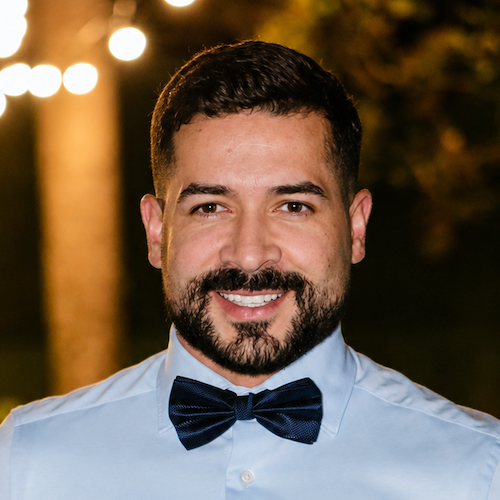
12:05pm – Keynote Speaker: Taylison Santos, Fórum Nacional de Proteção e Defesa Animal
Compassion moves people, but data moves systems. In this keynote, Taylison Santos argues that the fate of billions of farmed animals depends less on winning individual hearts than on measuring what matters — and acting on it. Drawing on his work in Brazil’s animal protection movement, he shows how data exposes the field’s central paradox: more than 90% of exploited animals live in farming, yet the cause receives less than 1% of global philanthropy. From the measurability of animal suffering to frameworks for structural reform and the prioritization of scarce resources, he traces how evidence turns moral urgency into strategy — and how a Global South practitioner is now building AI and data tools to scale that work. Attendees will leave with a practical case for evidence-based advocacy: what to measure, why it changes outcomes, and how data can redirect both attention and funding toward the animals who need it most.
Taylison Alves dos Santos is a Brazilian animal protection advocate, fundraiser, and nonprofit leader. He holds degrees in Physical Education from the Federal University of Paraná (UFPR) and Financial Management from Centro Universitário Dom Bosco. He currently serves as Vice President and Fundraising Lead at Fórum Nacional de Proteção e Defesa Animal, Brazil Country coordinator in The Pollination Project, and Founder and President of Instituto SELVA. His work focuses on strengthening the animal protection movement through advocacy, fundraising, coalition building, organizational development, and strategies aimed at creating systemic and lasting change for animals.
What Works, and Where: Advocacy Strategy and the Movement Landscape in India

12:25pm – Aditya Sindhavala Karanam – The State of Animal Advocacy in India: Organizations, Strategies, and Impact
This overview synthesizes existing knowledge on animal advocacy in India to help donors understand where and how change is being created for animals. India presents a unique landscape — enormous scale of animal use, a complex cultural relationship with animals, and a nascent but growing advocacy movement. With limited philanthropic resources flowing into this space, donors need a clear picture of what organizations exist, what strategies they are pursuing, and what evidence exists for their effectiveness. This synthesis aims to inform smarter, higher-impact giving decisions in an under-researched geographic context.
Aditya S. Karanam is the Outreach Coordinator at Animal Ethics, an international organization dedicated to expanding moral consideration to all sentient beings, with a particular focus on the well-being of wild animals. He also serves as the Director of Learning Experience at Electric Sheep, where he helps design and lead educational programs at the intersection of artificial intelligence and animal protection. Aditya is currently pursuing a Doctorate in Philosophy and Logic at the University of Santiago de Compostela, Spain, specializing in emerging issues in animal ethics from a longtermist perspective.

12:40pm – Nirupama Sarma – Vegan Advocacy in India – Failing?!!
This study examines the effectiveness of vegan advocacy in India by identifying successes, challenges, and recommendations, thereby addressing a significant knowledge gap. Given the complex intersections of dietary practices with religion, caste, and politics, India presents a uniquely challenging yet globally important context for vegan advocacy. A three-phase study design synthesizes the scientific evidence for effective veg*n advocacy through a literature review; applies the learnings to critically examine 23 key social media campaigns; and compares this with data from a public Knowledge, Attitudes, and Practices survey which identifies drivers, barriers, and advocacy needs for vegan adoption in India.
Nirupama Sarma is a strategy-evaluation consultant with over 30 years of experience in social change communication, working with the UN and international NGOs across Asia and Africa. An animal rights researcher and activist, she is the Principal Investigator of Vegan Advocacy in India: An Exploratory Study, a seminal three-phase research project comprising a literature review, social media content analysis, and public Knowledge, Attitudes, and Practices survey. She is also Producer-Co-Director for a near-final documentary, Meaty Matters in Bovine Times, which mainstreams animal rights as a legitimate broader social justice issue within India’s complex socio-political context.
Break (10min)
Levers of Power: Finance, Ballots, and Political Systems

1:05pm – Joel Christoph – Following the Money Behind Factory Farming: A Practical Map for Advocates to Influence Development Banks and UN Agencies
This expert overview asks a practical question: how can animal advocates influence the development banks, UN agencies, and national food ministries that fund the spread of factory farming across low- and middle-income countries, often out of public view? Recent research shows these institutions back industrial animal agriculture mainly as nutrition and food security policy rather than from hostility to welfare. By synthesizing development finance, food policy, and advocacy research, this talk gives advocates a map of where decisions get made, which arguments resonate inside these institutions, and which entry points let welfare concerns shape financing before factory farms are built.
Joel Christoph is a French-Japanese economist who studies how large institutions, from development banks to UN agencies, decide what to finance across the Global South. With Yuxi Xia and ProVeg, he co-founded Vegan Thesis, which helps students do animal advocacy research. His talk gives advocates an economist’s view of how to influence the institutions that finance factory farming, and how to turn animal welfare into a goal these funders will adopt.
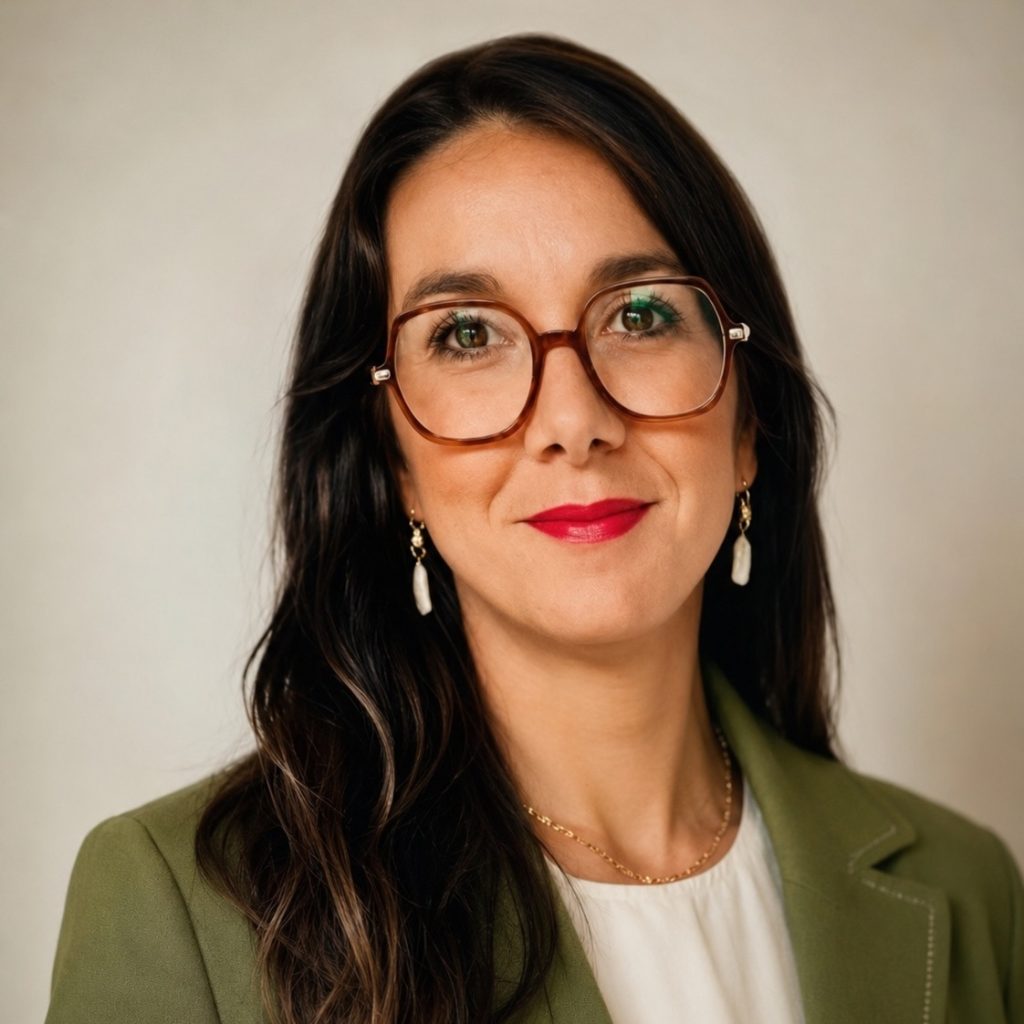
1:20pm – Marine Lercier – Can Ballots Help Animals? What Advocates Should Know Before Using Referendums, Initiatives, and Petitions
This expert overview asks when direct democracy mechanisms — such as referendums, ballot measures, and citizen initiatives — can help animal advocates, and when they are likely to fail. It also considers selected related institutional routes, such as formal petitions and European Citizens’ Initiatives, where they require an official response, debate, or agenda-setting step. Synthesizing global animal-related examples from 2014–2024, the presentation moves beyond simple “wins” and “losses” to assess what these tools can realistically achieve: legal change, institutional response, public visibility, coalition-building, legal learning, or clearer knowledge of procedural barriers.
Marine Lercier is a researcher in animal rights law with a decade of experience in academia, animal advocacy, and politics. She is the founder and Executive Director of the International Centre for Animal Rights and Ethics (ICARE) and founder and Editor-in-Chief of the Journal of Animal Rights Law. She also sits on the board of the Culture & Animals Foundation.
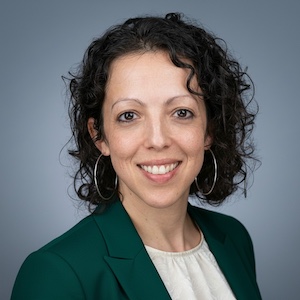
1:35pm – Lindsey Soffes – What We Lose by Treating Animal Agriculture and Animal Research Separately
The overview synthesizes scholarship, data, and historical accounts to examine the relationship between U.S. animal agriculture and animal research. It argues that “research” animals are farmed animals and that animal agriculture and animal research are interconnected components of the Animal Industrial Complex. The overview examines institutional, ideological, economic, political, and technological relationships between animal agriculture and animal research to illuminate connections overlooked within public discourse and advocacy, and to reveal how the categorization of animal victims obscures shared industrial structures — fragmenting efforts against industrialized animal exploitation. The goal is to inspire greater unity among advocates and more coordinated, strategically aligned efforts.
Lindsey Soffes is Head of Programs at Rise for Animals, a national animal rights organization working to end animal experimentation through exposure, advocacy, and public mobilization. With a background in law and mission-driven non-profit work, she leads investigative, educational, and community engagement initiatives that expose the hidden realities of the animal research industry, raise public awareness, support grassroots advocates, and advance animal liberation as a matter of justice.
Break (10min)
Knowledge Gaps: The Animals and Connections We Overlook
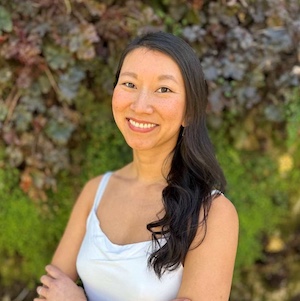
2:00pm – Christine Xu – Innovative Practices for Animal Welfare in Wild Capture Fisheries
This expert overview will synthesize emerging innovations that can reduce suffering in marine capture fisheries, an area often overlooked in animal advocacy despite the enormous numbers of wild aquatic animals affected. Drawing from Aquatic Life Institute’s 2026 Innovative Practices report, the presentation will explain which welfare problems occur across capture, crowding, hauling, handling, transport, and slaughter, and which technological or management interventions are available to reduce welfare hazards.
Christine Xu is the Head of Fisheries Welfare at Aquatic Life Institute, where she leads the organization’s efforts in advocating for improved animal welfare standards in capture fisheries with international institutions and the private sector. Christine has extensive experience in international ocean conservation, having worked with major NGOs in Washington, DC, including at The Pew Charitable Trusts using geospatial technology to track fishing vessels and deter illegal, unreported, and unregulated fishing. She currently sits on two advisory councils to the European Commission and is spearheading the animal welfare framework discussions at the Global Dialogue on Seafood Traceability, the leading seafood traceability platform. Originally from Tianjin, China, Christine grew up in California and now resides in Spain. She holds dual bachelor’s degrees from UC San Diego and a master’s degree in Corporate Responsibility from EOI Business School in Madrid.
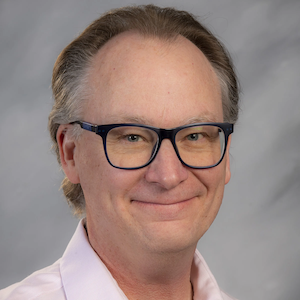
2:15pm – Michael Kisley – Beliefs About Animal Emotions Shape How People Treat Animals
This research overview, which draws from existing literature and the presenter’s own work and insights, will examine why people’s beliefs and perceptions about animal emotional lives matter for animal advocacy. Synthesizing research on human understanding of animal emotion states, the talk will focus on evidence linking these beliefs and perceptions to animal-relevant judgments, attitudes, and behaviors. The goal is to clarify how this growing area of study can inform more psychologically grounded, evidence-based approaches to animal advocacy. This work is part of a larger effort funded by a European Union COST action, AFFECT-EVO.
Michael A. Kisley, PhD, is a psychology professor at the University of Colorado Colorado Springs and director of the Colorado Anthrozoology Lab. He studies how people understand animals’ emotional lives, and how those beliefs shape the ways animals are treated. Michael developed the Beliefs about Animal Emotions Scale and leads research on human relationships with companion and farmed animals, with a particular interest in making psychological science useful for animal advocacy. His Fauna Connections presentation will draw on an international research collaboration he leads, integrating evidence from over 100 published studies on how people recognize and interpret emotions in animals.
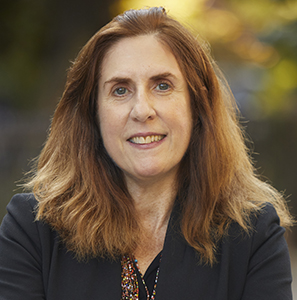

2:30pm – Mia MacDonald & Stephanie Feldstein – Missing Ingredients: How Agriculture and Diet Get Overlooked in Media Coverage of Climate Change
Terms related to dietary shifts appeared in only 1.2%, or 115 articles in the U.S. media over a recent three-year period of research. The broader themes of animal agriculture or meat appeared in only 3.2%, or 343 of the articles, despite the sector being responsible for 19% of global greenhouse gas emissions. Greenwashing by the Big Ag industry also obscures the role meat and dairy play in producing emissions, and needed policy action. This expert overview will share findings from a study conducted by the co-authors’ organizations; analyze additional studies of industry greenwashing strategies; and illuminate how the animal agriculture industry is driving the public (and to some degree, policy) narrative and ways advocates can overcome this.
Stephanie Feldstein (she/her) leads the Center for Biological Diversity’s work to highlight and address threats to endangered species and wild places from human population pressure, unsustainable food systems, and overconsumption. She holds a bachelor’s degree from the University of Michigan and has more than 20 years of experience in organizing, outreach, and communications, with a focus on animals and the environment. Stephanie is the author of The Animal Lover’s Guide to Changing the World and more than a dozen books for children on wildlife, the extinction crisis, and how humans impact the planet.
Mia MacDonald is the Executive Director/President of Brighter Green, where she directs strategy, programs, and collaborative projects. Mia has published many articles and op-eds, authored many policy papers and reports, been quoted in a variety of media, and contributed to several books, including Nobel Peace Laureate Wangari Maathai’s bestselling autobiography, Unbowed, and Vanessa Nakate’s memoir/manifesto, A Bigger Picture. She has taught in the Environmental and Animal Studies programs at New York University, at the Earth Institute at Columbia University, and in the Human Rights program at Columbia University’s School of International and Public Affairs. She was previously president and treasurer of the Green Belt Movement International-U.S., president of the Culture & Animals Foundation (where she now sits on the advisory board), on the U.S. board of the Africa Network for Animal Welfare, and on the board of directors at Farm Sanctuary and the Food Empowerment Project. Before founding Brighter Green, Mia was a policy analyst, writer, editor, and project manager on sustainable development, women’s rights, reproductive health, population, conservation, and animal protection. She consulted with the Ford Foundation, the World Wildlife Fund, and several UN agencies, among many others. She’s also worked as a journalist, editor, and non-profit manager. Mia received a master’s degree in public policy (international development) from the John F. Kennedy School of Government at Harvard University and a BA with honors in English from Columbia, and also studied at Oxford University.
Break (10min)
Changing What’s on the Plate: Diet Change Interventions and Their Evidence

2:55pm – Bastian Jaeger – Synthesizing Meat Reduction Interventions with LIME: Meta-Analytic Evidence on Intervention Effectiveness
Research on the effectiveness of different meat reduction interventions can help with the design of more successful campaigns. However, it is often difficult to find, evaluate, and synthesize the relevant evidence. In this talk, we will present meta-analytic evidence on the effectiveness of various types of interventions, which were drawn from the Library of Interventions for Meat Elimination (www.project-lime.org), an open and continuously growing library that we built to make this literature more accessible.
Bastian Jaeger is an Assistant Professor in the Social Psychology Department at Tilburg University in the Netherlands. His research at the intersection of psychology and animal welfare focuses on both foundational questions (how do people think about the moral status of animals?) and more applied questions (how effective are different interventions in reducing animal product consumption?).
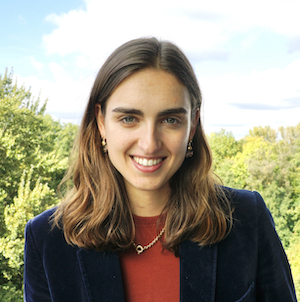
3:10pm – Lotte de Lint – Does Plant-Based Stick? What We Know About the Spillover Effects of Meat Reduction Interventions
Most food choice interventions are evaluated only on their immediate target: did people choose differently in that moment? However, for some interventions that we (animal advocates) are implementing, it seems likely that they also affect later choices, which influences the total effect of the implemented change. This talk synthesizes current behavioral science research on spillover effects in food choice — specifically, whether meat reduction interventions influence eating behavior beyond the targeted moment or context, and in which occasions these subsequent effects tend to be positive, neutral, or negative. The aim is to get advocates to think about the longer-term effects of the changes they advocate for and provide a clearer basis for deciding which interventions to promote, implement, and fund.
Lotte de Lint is a PhD researcher at Wageningen University, where she runs field studies evaluating interventions designed to stimulate plant-based eating and the longer-term effects these interventions have on behavior. Alongside her research, she is active in the animal movement: she is Fund Manager for Animal Welfare and Food Transition at the Dutch effective giving organization, and she co-organizes ‘Careers for Animals,’ an annual event that helps people find careers focused on doing the most good for animals.
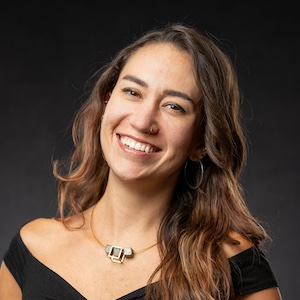
3:25pm – Samantha Derrick – Shifting the Norm: How Universities, Music Festivals, and Cultural Spaces Are Changing the Way People Eat
This overview synthesizes research on how mainstream cultural institutions (universities, music festivals, and entertainment venues) serve as high-leverage environments for shifting food norms toward plant-based eating. Rather than relying solely on individual persuasion or activist outreach, we examine evidence for embedding plant-forward change in spaces that shape cultural identity and social norms at scale. Drawing on behavioral science, social norm theory, and Plant Futures’ programmatic data, this synthesis helps advocates understand how to reach beyond committed activists and influence broader, more diverse populations.
Samantha Derrick is the co-founder and Executive Director of Plant Futures, a global student movement born at UC Berkeley that transforms food systems through curriculum, careers, community, and culture change. She holds an MPH from UC Berkeley and has worked across the environmental sector in the U.S., Mexico, and India. Her work focuses on advancing sustainable food systems, building youth-led movements, and shifting how people relate to food, culture, and ecological responsibility. She is particularly interested in harnessing education, music, and cultural spaces as levers for long-term systems change. Sam is nomadic, living seasonally between Mexico City, Florida, and California.
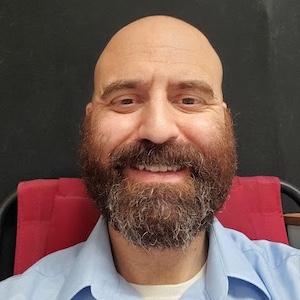

3:40pm – Howard Nye & Maddie Youngman – From Evidence to Adoption: Helping Institutions Say Yes to Plant-Forward Food Practices
This expert overview asks how animal advocates can help institutions adopt plant-forward food changes when leaders fear backlash from students, staff, customers, or community members. Research already shows that defaults, menu design, and choice architecture can shift food choices. The harder strategic question is how to make institutions comfortable piloting and sustaining these changes, especially where meat is culturally or politically salient. We synthesize research on plant-forward nudges, food choice behavior, nudge acceptance, and institutional dining, using our Alberta university survey and focus group study as a case example of adoption challenges in a less receptive environment.
Howard Nye is an Associate Professor of Philosophy at the University of Alberta and works with the Food Impact Network and Food with Benefits Alliance on plant-forward food system transitions. He works primarily in political philosophy and ethics, with related interests in the philosophy of mind and decision theory. Howard’s research investigates justice and the food system, the ethics of collective action, animal ethics, and animal minds. He has published numerous papers in philosophy and co-authored work in environmental economics. Much of his current research investigates the desirability and feasibility of a just transition to a predominantly plant-based food system in Canada.
Maddie Youngman (she/they) has a BA in Philosophy and Government from the University of Texas at Austin, an MA in Philosophy, and an MA in Gender and Social Justice from the University of Alberta. Maddie is currently a PhD student in Philosophy at the University of Alberta. Their research interests include Feminist, Queer, and Indigenous philosophies, the ethics of collective action, animal ethics, and environmental justice. They are currently working on challenges and strategies for sustainable food system transition with the SSHRC-funded Food Impact Network and the Food with Benefits Alliance.
Break (10min)
Closing / Networking


4:05pm – The Faunalytics Lens
Join Faunalytics’ karol orzechowski and Meghann Cant for an in-depth session on The Faunalytics Lens, the free AI research assistant that draws on our Research Library of 6,000+ entries carefully curated over the past 25 years. Learn how The Lens actually works — how it searches and cites only our vetted collection instead of the open web, what its limits are, and the thinking behind why we built it this way. Together, we’ll also walk through practical, real-world use cases for advocates and researchers: how to ask better questions, what kinds of research tasks it’s suited for, and how to bring it into your own work. Come with your questions; there’ll be time to dig into the details.

4:35pm – Closing Comments by Faunalytics Executive Director, Brooke Haggerty
Networking Social
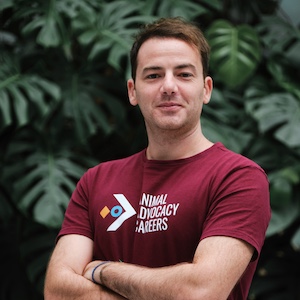
4:40pm – Networking: Animal Advocacy Careers
Close out Fauna Connections with a career-focused workshop from Animal Advocacy Careers. Lorenzo Fruscella, Career Advising Specialist, will share practical resources and firsthand experience to help you explore or transition into a career in animal advocacy. There’ll be plenty of time for discussion and questions, so you can get advice tailored to your own situation — whether you’re just getting started or looking to make your next move.
Lorenzo Fruscella is a biologist with a background in sustainable farming systems and biotechnology. Originally from Rome, Italy, he combined academic training in California (bachelor’s), Scotland (master’s), and London (PhD) with practical experience at research institutions and farming operations across the U.S., Europe, Madagascar, and New Zealand. Motivated to use his scientific background to improve the lives of animals, Lorenzo transitioned into the animal advocacy movement by leading a campaign to improve the welfare of aquatic animals. After a few years in the animal advocacy sector, he now works as Career Advising Specialist at Animal Advocacy Careers (AAC), an organization dedicated to helping people build high-impact careers that improve the lives of animals.